Lets get one thing straight, first of all. Whenever I talk about BBQ on here, its almost certainly going to be referring to the low'n'slow style that is more commonplace across the US, as opposed to the hot'n'fast sausages and burgers that we are more used to over here in the UK.
I am a big fan of BBQ, have grown up on summers full of hot'n'fast (not just burgers and sausages though - fish, pork chops, lamb cutlets etc) and have since got into smoking food, that is the US, low'n'slow, pitmaster BBQ approach of cooking large, relatively tough cuts of meat for long periods of time (hours). For this, I own a Weber Smokey Mountain, which is a large smoker that is capable of easily holding a decent low temperature for hours, and have cooked a range of things (pork ribs, beef short ribs, pork shoulder etc).
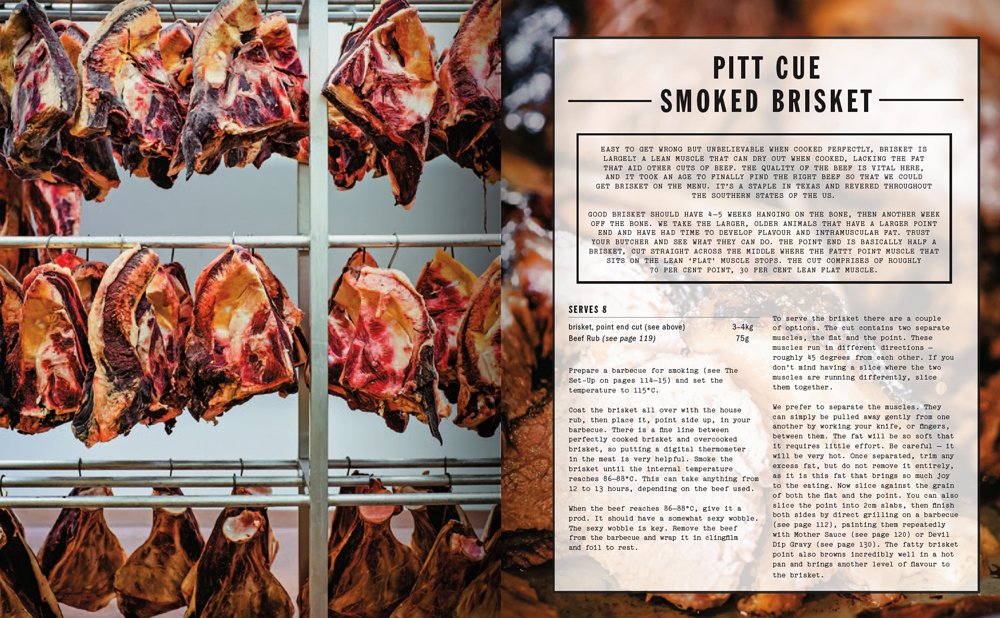
To be honest though, BBQ books are a bit of a strange one. I own several BBQ books (including Aaron Franklin's book), and regularly pick them up and peruse them, but the thing is, there isn't that much to it, and whats more, lots of the books will give you quite different, often contrasting advice. Really, when it comes to low'n'slow BBQ, its not so much about recipes, its about technique, experience and patience - stuff that a book can't really teach you. Most BBQ recipes you might see, let's say for beef brisket, will follow something along the lines of: trim the fat off the meat, salt + season the beef with a preferred dry-rub (this is where there maybe some variation, everyone will have their own special dry-rub ratio, but it will likely be some variation of each other), cook for some hours (they might recommend anything between 10 and 18 hours). They might also recommend wrapping it mid way through, but really thats all there is to it. And given the contrasting advice, and the differences in BBQs, pieces of meat, etc, I have concluded it comes down to experience. Cook a piece a few times and you will get to recognise the feel, look and temperatures that work for you.
But that said, I still enjoy reading my BBQ books - both for inspiration, aesthetics and to get into the mood to BBQ!

This book, specifically, has some nice history and Aaron talks about how he first got setup by cooking for the neighbourhood, and challenges the restaurant has faced (it got burnt down), along with some recipes and techniques. Not my favourite BBQ books, but there is no denying he knows his stuff - and he comes across nicely, so its a nice addition for a BBQ fan (not necessarily a good first book for someone starting out in BBQ) - if you want quicker insight into the how-to of BBQ, Aaron has published lots of videos on his Youtube channel of him actually cooking stuff, which are worth a look.
I am a big fan of BBQ, have grown up on summers full of hot'n'fast (not just burgers and sausages though - fish, pork chops, lamb cutlets etc) and have since got into smoking food, that is the US, low'n'slow, pitmaster BBQ approach of cooking large, relatively tough cuts of meat for long periods of time (hours). For this, I own a Weber Smokey Mountain, which is a large smoker that is capable of easily holding a decent low temperature for hours, and have cooked a range of things (pork ribs, beef short ribs, pork shoulder etc).
To be honest though, BBQ books are a bit of a strange one. I own several BBQ books (including Aaron Franklin's book), and regularly pick them up and peruse them, but the thing is, there isn't that much to it, and whats more, lots of the books will give you quite different, often contrasting advice. Really, when it comes to low'n'slow BBQ, its not so much about recipes, its about technique, experience and patience - stuff that a book can't really teach you. Most BBQ recipes you might see, let's say for beef brisket, will follow something along the lines of: trim the fat off the meat, salt + season the beef with a preferred dry-rub (this is where there maybe some variation, everyone will have their own special dry-rub ratio, but it will likely be some variation of each other), cook for some hours (they might recommend anything between 10 and 18 hours). They might also recommend wrapping it mid way through, but really thats all there is to it. And given the contrasting advice, and the differences in BBQs, pieces of meat, etc, I have concluded it comes down to experience. Cook a piece a few times and you will get to recognise the feel, look and temperatures that work for you.
But that said, I still enjoy reading my BBQ books - both for inspiration, aesthetics and to get into the mood to BBQ!
This book, specifically, has some nice history and Aaron talks about how he first got setup by cooking for the neighbourhood, and challenges the restaurant has faced (it got burnt down), along with some recipes and techniques. Not my favourite BBQ books, but there is no denying he knows his stuff - and he comes across nicely, so its a nice addition for a BBQ fan (not necessarily a good first book for someone starting out in BBQ) - if you want quicker insight into the how-to of BBQ, Aaron has published lots of videos on his Youtube channel of him actually cooking stuff, which are worth a look.